
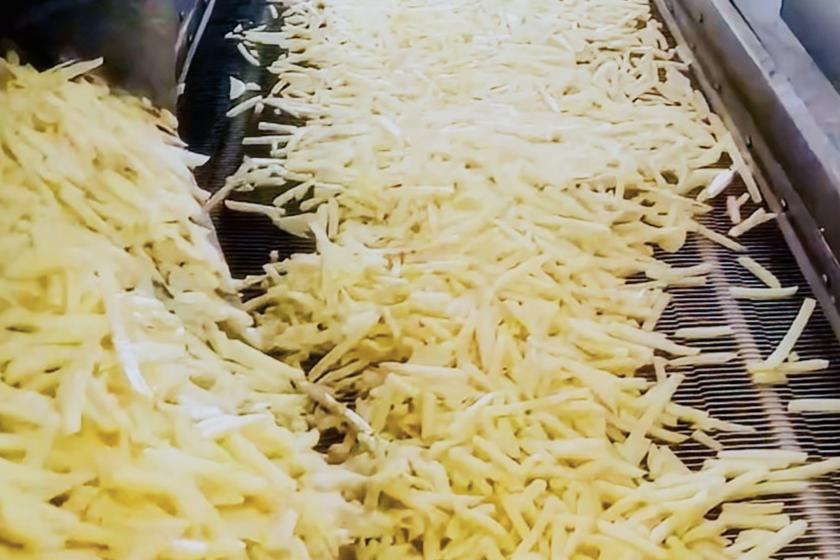
French fries are no longer just a fast-food side dish. They have become a globally traded processed food product shaped by agricultural inputs, industrial technology, logistics systems, and evolving consumer expectations. Understanding the factors that influence both the production and consumption of french fries is essential for manufacturers, foodservice buyers, and B2B partners seeking stable supply, consistent quality, and long-term competitiveness.
From our experience as a professional participant in the french fries processing industry, these influencing factors can be grouped into five interconnected dimensions: raw material quality, agricultural supply stability, processing technology, food safety control, and market-driven consumption trends.
1. Raw Material Quality: The Foundation of French Fries Production
1.1 Potato Variety Selection and Key Quality Indicators
Raw potatoes account for the largest share of production cost and quality variability in french fries manufacturing. Among all influencing factors, potato variety selection has the most direct impact on color, texture, oil absorption, and yield.
In our own production practice, we primarily use the “McCain-type” processing potato varieties, which have demonstrated stable performance under industrial conditions. Key indicators include:
Dry matter content: 22%–24%
Reducing sugar content: controlled below 0.3%
These parameters directly determine frying color and sensory quality. Potatoes with insufficient dry matter result in soggy fries, while excessive reducing sugars lead to dark coloration and higher acrylamide formation during frying.
Our long-term data shows that maintaining these thresholds significantly improves product consistency, especially for clients supplying QSR chains and frozen food distributors.
1.2 Raw Material Supply Risks and Price Volatility
The influence of agricultural supply conditions is often underestimated until disruption occurs. In 2025, a raw material shortage event exposed systemic vulnerabilities in the supply chain.
Due to a 30% reduction in processing potato planting area in North China, driven by climate uncertainty and farmer crop switching, raw potato prices fluctuated by up to 45% within a single season. This event reinforced a critical lesson: production planning without agricultural risk management is no longer viable.
For B2B buyers, stable sourcing is not just a cost issue—it directly affects delivery reliability and contract fulfillment.
2. Raw Material Quality Control: From Field to Processing Line
2.1 A Three-Level Quality Inspection System
To mitigate variability and ensure consistent input quality, we established a three-tier raw material inspection system:
Field inspection: starch content and growth status
Warehouse intake testing: reducing sugar levels
Pre-processing inspection: disease incidence, especially black spot defects
This system enables early intervention before defective batches enter the production line.
2.2 Disease Pressure and Climate Impact
In summer 2023, prolonged rainfall significantly increased the incidence of bacterial soft rot and brown rot, with disease rates reaching 12% in some batches. Without pre-processing inspection, such defects would have caused substantial yield loss and quality complaints downstream.
This experience highlights how climate volatility increasingly influences french fries production, making inspection protocols a strategic necessity rather than a compliance formality.
3. Processing Technology: Precision as a Competitive Advantage
3.1 Cutting Accuracy and Dimensional Consistency
Dimensional uniformity plays a critical role in frying performance and customer perception. We upgraded our cutting process by introducing laser-guided cutting machines, which reduced length tolerance to ±1.5 mm.
Compared with traditional mechanical cutters, this upgrade delivered:
40% efficiency improvement
More uniform frying behavior
Reduced breakage during freezing and transport
For B2B clients serving branded foodservice outlets, such consistency is often a non-negotiable requirement.
3.2 Frying Parameters and Acrylamide Control
Frying is the most sensitive stage in french fries processing. Even small temperature fluctuations can significantly affect color, oil uptake, and food safety indicators.
Through continuous optimization, we stabilized frying oil temperature within ±2°C, which reduced acrylamide formation to 60% of the EU regulatory limit. This level of control is increasingly important as global buyers tighten food safety and regulatory compliance requirements.
4. Advanced Preservation Technology: Freeze-Drying and Cost Trade-Offs
4.1 Freeze-Drying as a Quality Breakthrough
In recent years, freeze-drying technology has emerged as a premium solution for extending shelf life while preserving texture. We adopted a process combining:
Rapid freezing at −35°C
Vacuum drying
This approach shortened rehydration time to 3 minutes and achieved a rehydration rate of 95%, making the product suitable for high-end foodservice and specialty retail channels.
4.2 Economic Considerations for B2B Buyers
However, freeze-drying equipment investment is approximately three times higher than traditional production lines. For B2B decision-makers, this creates a clear trade-off between product differentiation and capital expenditure.
The key question is not whether the technology is superior, but whether the target market can absorb the added value.
5. Food Safety and Process Control: HACCP in Practice
5.1 HACCP Implementation and Critical Control Points
Food safety remains a decisive factor influencing both production credibility and consumption confidence. We have fully implemented a HACCP system, with defined Critical Control Points (CCPs) throughout the process.
One notable example is the blanching stage, where we apply real-time pH monitoring.
pH maintained between 6.5 and 7.0
Effective suppression of microbial growth
Improved product stability before freezing
Such process-level control is often a key evaluation criterion for international buyers and regulatory audits.
6. Consumption Trends: How Market Demand Shapes Production
Consumer preferences ultimately shape production decisions. Several trends are particularly influential:
Growing demand for consistent quality across batches
Heightened awareness of food safety and regulatory compliance
Interest in faster preparation and better texture
Expansion of foodservice chains in emerging markets
For manufacturers, aligning production parameters with these consumption drivers is essential to remain competitive.
7. Implications for B2B Stakeholders
From a B2B perspective, the factors influencing french fries production and consumption translate into strategic considerations:
Raw material suppliers: need stable quality and traceability
Processing plants: must balance efficiency, compliance, and innovation
Equipment buyers: should evaluate ROI based on target markets
Foodservice clients: require consistent performance under operational conditions
Our experience shows that long-term partnerships are built on process transparency, data-driven control, and shared risk management, not just price negotiations.
FAQs
What factors should buyers consider when sourcing potatoes for french fries production?
Short Answer
Buyers should prioritize potato varieties with stable dry matter (22–24%) and low reducing sugar (<0.3%), along with traceable sourcing, disease control, and consistent seasonal supply to ensure stable frying color and texture.
How does raw material quality affect french fries processing costs and consistency?
Short Answer
High-quality potatoes reduce oil absorption, color defects, and processing losses, directly lowering rework rates and improving batch-to-batch consistency, which is critical for large-scale foodservice and export-oriented production.
What processing equipment specifications matter most for commercial french fries production?
Short Answer
Key specifications include cutting accuracy (±1.5 mm), stable frying temperature control (±2°C), and integrated freezing or drying systems, all of which impact yield, food safety compliance, and operational efficiency.
How can manufacturers reduce acrylamide levels in french fries for regulatory compliance?
Short Answer
Acrylamide levels can be reduced by controlling reducing sugars in raw potatoes, maintaining stable frying temperatures, and optimizing blanching parameters, often achieving levels well below EU regulatory limits.
Is freeze-drying technology suitable for large-scale french fries production?
Short Answer
Freeze-drying offers superior texture and fast rehydration but requires equipment investment up to three times higher than conventional lines, making it suitable mainly for premium or specialty foodservice markets.
How do food safety systems like HACCP influence buyer trust and supplier selection?
Short Answer
HACCP systems with clearly defined CCPs demonstrate process control and risk management, significantly increasing buyer confidence during audits and long-term supplier qualification.
What supply chain risks should B2B buyers consider when contracting french fries suppliers?
Short Answer
Buyers should assess raw material sourcing stability, regional planting risks, price volatility, and contingency planning, especially in regions prone to climate-driven supply disruptions.
How can buyers evaluate long-term partners in the french fries industry?
Short Answer
Long-term partners are distinguished by data-driven quality control, transparent process documentation, stable sourcing strategies, and the ability to adapt production to evolving market and regulatory demands.
Conclusion
The production and consumption of french fries are shaped by a complex interaction of agriculture, technology, quality control, and market demand. From raw potato selection and disease management to precision processing and advanced preservation, each factor directly influences product performance and business outcomes.
For B2B stakeholders, understanding these factors is the first step toward building resilient supply chains and sustainable growth in a highly competitive global market.
If you are looking to optimize your french fries supply chain, evaluate processing solutions, or explore stable sourcing partnerships, feel free to contact us for technical insights and cooperation opportunities.
Frozen French Fries Production Process: From Potato to Plate
Food Safety Standards & International Certifications: Ensuring Product Quality and Global Compliance