
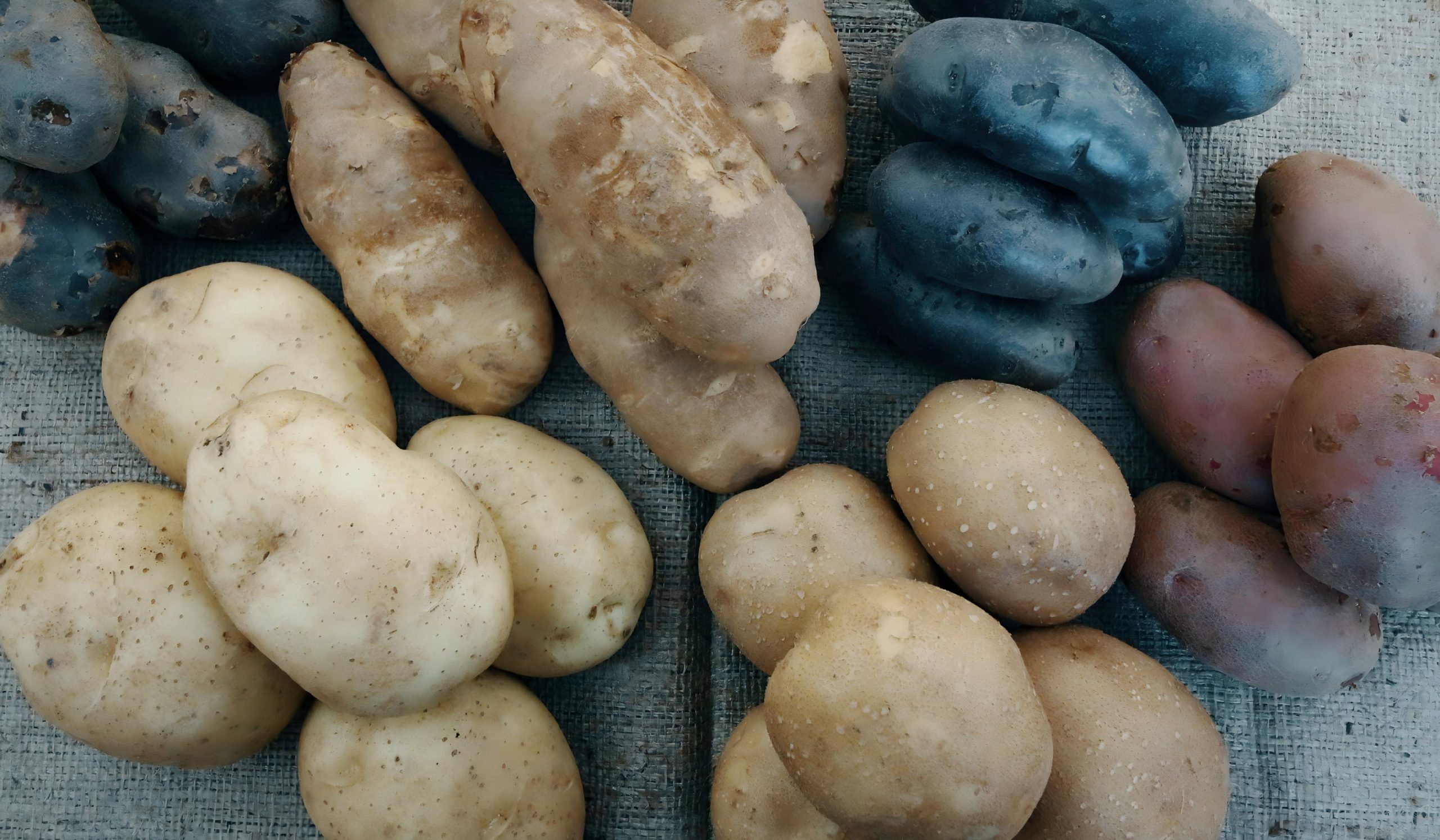
As someone who has spent years in the French fry processing industry, I can confidently say this:
the secret behind the best potatoes for French fries is not in the fryer—it starts in the field.
Over time, through repeated production trials, raw material comparisons, and real-world processing data, I’ve come to understand that potato variety, composition, and growing region together determine whether a fry turns out crispy, fluffy, and consistent—or oily, soft, and uneven.
In this article, I’ll walk you through:
- The main potato varieties used globally for French fries
- The science behind starch, sugar, and moisture
- And why, in my experience, potatoes grown around 41°N latitude in Northern and Northwestern China consistently deliver the best results
1. Global Potato Varieties Used for French Fries
Different regions have developed their own preferred potato varieties for French fry production, but they all share similar compositional traits.
1.1 North America (Industrial Benchmark)
The North American processing industry is the most standardized and has influenced global French fry production.
Common varieties:
- Russet Burbank
- Ranger Russet
- Umatilla Russet
- Clearwater Russet
Key characteristics:
- High dry matter (20–22%)
- Low reducing sugar (<0.25%)
- Long tuber shape (ideal for cutting)
From my perspective, these varieties set the global benchmark for industrial fries, especially in large-scale frozen French fry production.
1.2 Europe (Flavor + Tradition)
Europe balances industrial processing with culinary tradition.
Common varieties:
- Bintje
- Maris Piper
- Innovator
- Agria
Key characteristics:
- Slightly denser texture
- Stronger potato flavor
- Excellent for thick-cut fries and chips
Compared to North American varieties, European potatoes often deliver richer flavor but slightly less structural uniformity in industrial processing.
1.3 China (Rapidly Evolving Processing System)
In China, the French fry industry has developed quickly, with increasing standardization in raw material selection.
Common processing varieties:
- McCain system varieties (widely adopted)
- Shepody
- Atlantic
From years of hands-on production experience and repeated comparisons, I’ve observed:
McCain-type potatoes consistently outperform others in both taste and processing stability.
They offer:
- More stable dry matter content
- Lower sugar fluctuation during storage
- Better frying color consistency
1.4 Other Notable Varieties
- Kennebec (used in food service)
- Yukon Gold (more common in home cooking)
These are not typically used in large-scale industrial fry production due to lower consistency and less optimal composition.
2. What Makes the Best Potatoes for French Fries
Not all potatoes behave the same during frying. The key lies in chemical composition, not just variety names.
2.1 Starch Content — The Foundation of Texture
Ideal range: 20–25% dry matter
Starch determines:
- Crispiness of the outer layer
- Fluffiness of the interior
- Oil absorption rate
From my production experience:
When starch is too low, fries become soft and greasy.
When starch is high and stable, fries develop a crisp shell and a light, fluffy core.
High-amylose starch also helps reduce oil uptake, improving both texture and cost efficiency.
2.2 Moisture Content — The Hidden Variable
Typical range: 75–80%
Moisture affects:
- Frying time
- Structural stability
- Final mouthfeel
Too much moisture leads to:
- Hollow or soggy fries
- Excess oil absorption
Lower moisture (within a controlled range) results in:
- Better crust formation
- More consistent texture
2.3 Reducing Sugar — The Color Controller
Ideal range: <0.1–0.25%
Reducing sugars directly affect:
- Fry color (golden vs dark brown)
- Flavor (clean vs bitter)
- Acrylamide formation risk
In practice:
High sugar potatoes brown too quickly—before the inside is fully cooked.
This is one of the most critical quality control points in industrial frying.
2.4 Size and Shape — Industrial Efficiency
Ideal potatoes for French fries are:
- Long and oval-shaped
- Large in size
This ensures:
- Longer fry cuts
- Less trimming waste
- Higher processing yield
3. Composition vs Taste: A Practical Breakdown
From a processor’s perspective, taste and texture are direct results of composition:
| Component | Too Low | Too High | Optimal Result |
|---|---|---|---|
| Starch | Soft, oily | Dry, brittle | Crispy outside, fluffy inside |
| Moisture | Dense | Soggy | Balanced structure |
| Sugar | Pale | Dark, bitter | Golden color |
Conclusion:
The best potatoes for French fries are those with high starch, low sugar, and controlled moisture.
4. Why These Varieties Are Chosen in Industry
From years of production, I’ve learned that variety selection is not just about taste—it’s about consistency and control.
4.1 Processing Stability
Industrial production requires:
- Uniform frying behavior
- Predictable output
Varieties like Russet and McCain-type potatoes excel because they are genetically stable and predictable.
4.2 Storage Performance
A major challenge is cold-induced sweetening (sugar increase during storage).
Good processing varieties:
- Resist sugar accumulation
- Maintain frying color over time
4.3 Yield and Efficiency
The right variety improves:
- Cutting efficiency
- Oil usage
- Energy consumption
4.4 Supply Chain Reliability
Industrial varieties are selected for:
- High yield
- Disease resistance
- Scalable production
5. Why Growing Region Matters: 41°N Latitude Advantage
Beyond variety, growing location plays a critical role.
In our operations, we source most of our potatoes from Northern and Northwestern China, around 41°N latitude.
From years of sourcing and processing, I’ve found that this region consistently produces the best potatoes for French fries.
Why 41°N Latitude Is Ideal:
1. Long Daylight Hours
- Promotes starch accumulation
- Leads to higher dry matter content
2. Large Day–Night Temperature Difference
- Enhances carbohydrate conversion
- Improves texture and density
3. Cooler Growing Climate
- Slows sugar accumulation
- Helps maintain low reducing sugar levels
4. Suitable Soil Conditions
- Well-drained soils support uniform tuber growth
- Better shape and size consistency
From practical experience:
Potatoes grown in this region consistently deliver better frying color, higher crispiness, and more stable processing performance compared to other regions.
6. My Industry Insight: Why McCain-Type Potatoes Perform Best in China
After years of comparing different raw materials—including Russet, Shepody, and Atlantic—I’ve reached a clear conclusion:
McCain-type potatoes provide the best overall performance for French fry production in China.
Key Advantages I’ve Observed:
- Stable dry matter content → consistent texture
- Low sugar fluctuation → reliable frying color
- Strong storage performance → less seasonal variation
- Balanced structure → ideal crisp-outside, fluffy-inside fries
Most importantly:
They perform consistently under real industrial conditions—not just in theory.
7. Final Thoughts
When people ask me about the best potatoes for French fries, my answer is always the same:
It’s not just about the variety.
It’s about the combination of:
- Genetics (variety)
- Chemistry (starch, sugar, moisture)
- Geography (growing region)
And in my experience:
Potatoes grown around 41°N latitude in Northern China, especially McCain-type varieties, deliver the most reliable and highest-quality French fries.
At the end of the day, the fryer can only do so much.
The real quality of a French fry is already decided long before it reaches the oil.