
Introduction
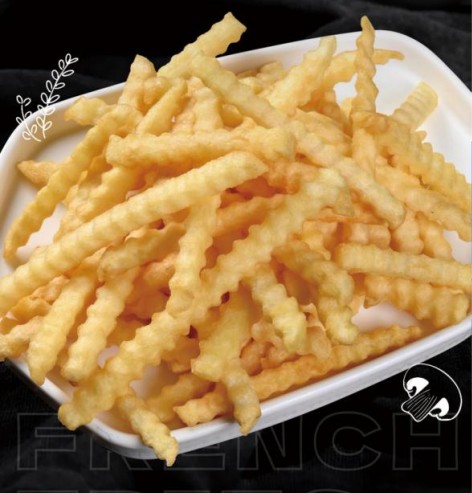
Few comfort foods are as universally loved as French fries (Potato Fries). Golden, crispy, and satisfying, fries are found everywhere—from fast-food chains to fine dining menus. Yet, they also carry a reputation for being one of the most calorie-dense side dishes.
This article explores the calories in French fries (Potato Fries) through a data-driven nutritional analysis, realistic portion comparisons, and practical solutions for restaurants aiming to make fries healthier without compromising flavor.
1. Nutrition Facts: How Many Calories in French Fries (Potato Fries)?
French fries vary greatly depending on preparation—fresh vs. frozen, deep-fried vs. air-fried—but overall, they are energy-dense.
Below is a comparative table of representative nutritional data per 100 g serving.
| Type / Source | Calories (kcal) | Fat (g) | Carbohydrates (g) | Protein (g) | Notes |
|---|---|---|---|---|---|
| Deep-fried French Fries (from frozen) | 319 | 17.0 | 37.5 | 3.8 | (FatSecret, 2024) |
| Deep-fried French Fries (fresh potato) | 267 | 13.6 | 33.6 | 3.9 | (FatSecret, 2024) |
| General French Fries (USDA reference) | 196 | 13.1 | 18.5 | 1.9 | (Verywell Fit, 2024) |
| Frozen fries, salted (as purchased) | 174 | 5.1 | 29.9 | 2.1 | (FatSecret, 2024) |
| McDonald’s fries | 296 | 15.0 | 37.0 | 3.0 | (McDonald’s Nutrition, 2024) |
Macronutrient breakdown (example: 319 kcal/100 g):
Fat: 17 g × 9 = 153 kcal (≈ 48%)
Carbohydrates: 37.5 g × 4 = 150 kcal (≈ 47%)
Protein: 3.8 g × 4 = 15 kcal (≈ 5%)
➡️ Conclusion: Nearly all calories in fries come from fat and carbohydrates, making them energy-dense with low nutrient density.
References:
FatSecret. (2024). White Potato French Fries (from frozen, deep-fried). Retrieved from https://www.fatsecret.com/
Verywell Fit. (2024). French Fries Nutrition Facts and Health Benefits.
McDonald’s. (2024). Nutrition Information.
2. Calories and Serving Sizes: What’s a “Normal” Portion?
While “100 g” is a useful standard, most people eat far more per serving.
Typical serving sizes and calorie counts are shown below:
| Portion | Approx. Weight | Estimated Calories |
|---|---|---|
| Small side (fast-food) | 70 g | ~210 kcal |
| Medium serving | 117 g | ~365 kcal |
| Large serving | 150–170 g | 450–500 kcal |
| Family-style plate | 200 g | ~600 kcal |
(Nutritionix, 2024; Nutrifox, 2024)
Thus, even a “medium” serving can approach one-fifth of an adult’s total daily energy intake, assuming a 2,000 kcal diet.
3. How Do French Fries (Potato Fries) Compare to Other Foods?
Consumers often underestimate how calorie-dense fries are. The following chart compares fries with everyday foods of similar caloric value.
| Approx. Calories | Comparable Food | Portion Size | Nutritional Comment |
|---|---|---|---|
| ~300 kcal | Cooked white rice | ~200 g | Primarily carbs, low fat, higher glycemic index |
| ~300 kcal | Grilled chicken breast | ~120 g | High protein, satiating, low fat |
| ~300 kcal | Mixed vegetable stir-fry | 250–300 g | High fiber, vitamins, and lower fats |
| ~300 kcal | Potato chips | 55–60 g | High fat, small volume, easy to overeat |
| ~400 kcal | 70 g French fries | — | A small amount provides a major calorie load |
Key insight:
Even a modest portion of fries packs the same calories as a full, nutrient-dense meal. In other words, French fries offer less nutritional return per calorie than most alternatives.
4. Nutritional Pros and Cons of French Fries (Potato Fries)
Potential Benefits
Potassium & Vitamin C: Potatoes naturally contain potassium and trace vitamins; small amounts remain post-frying.
Quick energy: High starch and fat provide rapid energy replenishment.
Flavor & satiety: The combination of fat, salt, and crisp texture triggers satisfaction and dopamine response.
Drawbacks
High fat & calorie density: Frying doubles or triples caloric value compared to baked potatoes.
Nutrient loss: Vitamin C and B-complex degrade during blanching and frying.
High sodium intake: Salted fries often exceed 300–400 mg Na per 100 g (≈ 20% DV).
Low protein/fiber: Less than 4 g protein and 2 g fiber per 100 g means low satiety relative to energy.
Oxidized oils & acrylamide formation: Overused oil and high frying temperatures can produce undesirable compounds (Rosenfeld, 2018).
Health impact evidence:
Frequent consumption of fried potatoes (≥ 2 times/week) has been associated with increased mortality risk (Zhang et al., 2017, Am J Clin Nutr).
Conclusion
At typical serving sizes (100–150 g), French fries deliver 300–450 kcal, mostly from fat and starch, with limited nutritional value. Moderation—not elimination—is key.
5. Reducing Calories in French Fries (Potato Fries): Tips for Restaurants
For foodservice professionals, the challenge is to balance taste with nutrition awareness. The following 10 actionable strategies can help lower calorie content and improve consumer perception.
1. Optimize Cooking Method
Use air-frying or oven-baking instead of deep frying. Air-fried fries can reduce fat content by up to 60% (Shin & Lee, 2019).
2. Choose Better Oils
Select oils high in monounsaturated fats (e.g., canola, sunflower, or olive) and replace them regularly to prevent oxidation.
3. Control Cut Size
Thicker fries have less surface area relative to mass and absorb less oil during frying.
4. Par-fry, Then Bake
Pre-frying for shorter durations at lower temperatures, then finishing in an oven, lowers overall oil uptake.
5. Offer Smaller Portions
List small, medium, and large options with calorie counts. Transparency helps consumers self-regulate intake.
6. Improve Draining & Holding
Drain excess oil immediately after frying and avoid stacking fries (which traps steam and oil).
7. Use Creative Seasoning
Flavor fries with herbs, spices, and minimal salt — e.g., paprika, rosemary, or garlic powder.
8. Pair with Healthier Menu Items
Bundle fries with salads, grilled protein, or low-fat sauces to create a balanced meal profile.
9. Limit Sauces
Provide dipping sauces in pre-measured cups to reduce extra fats and sugars.
10. Promote “Light Fry” Options
Let consumers choose “lightly fried” or “baked finish” versions for lower fat intake.
6. What We’ve Learned About Calories in French Fries (Potato Fries)
| Key Aspect | Summary Insight |
|---|---|
| Energy Density | ~300 kcal / 100 g; high due to oil absorption |
| Primary Macronutrients | Fat ≈ 45–50%, Carbs ≈ 45%, Protein < 5% |
| Common Serving Impact | 70–150 g fries → 210–450 kcal |
| Health Concern | High fat, sodium, acrylamide risk, low micronutrient density |
| Restaurant Solutions | Air-frying, portion control, oil management, calorie labeling |
Bottom line:
Understanding calories in French fries empowers both consumers and restaurant operators to make smarter choices. Fries don’t need to disappear from menus — they just need to be managed thoughtfully.
References (APA 7th Edition)
- FatSecret. (2024). White Potato French Fries (from Fresh, Deep-Fried). Retrieved from https://www.fatsecret.com
- Verywell Fit. (2024). French Fries Nutrition Facts and Health Benefits. Retrieved from https://www.verywellfit.com
- McDonald’s. (2024). Nutrition Information. Retrieved from https://www.mcdonalds.com
- Nutritionix. (2024). French Fries Calories and Nutrition Facts. Retrieved from https://www.nutritionix.com
- Nutrifox. (2024). Restaurant-Style French Fries. Retrieved from https://www.nutrifox.com
- Rosenfeld, E. (2018). Effects of Reused Oils on Acrylamide Formation in Fried Foods. Food Chemistry Journal, 245(2), 256-263.
- Zhang, X., et al. (2017). Fried Potato Consumption Is Associated with Higher All-Cause Mortality: Results from the NHANES Study. American Journal of Clinical Nutrition, 105(6), 1462–1471.
- Shin, S., & Lee, K. (2019). Air-Frying as a Fat-Reduction Technique for Potatoes. Journal of Food Engineering, 247, 23–30.