
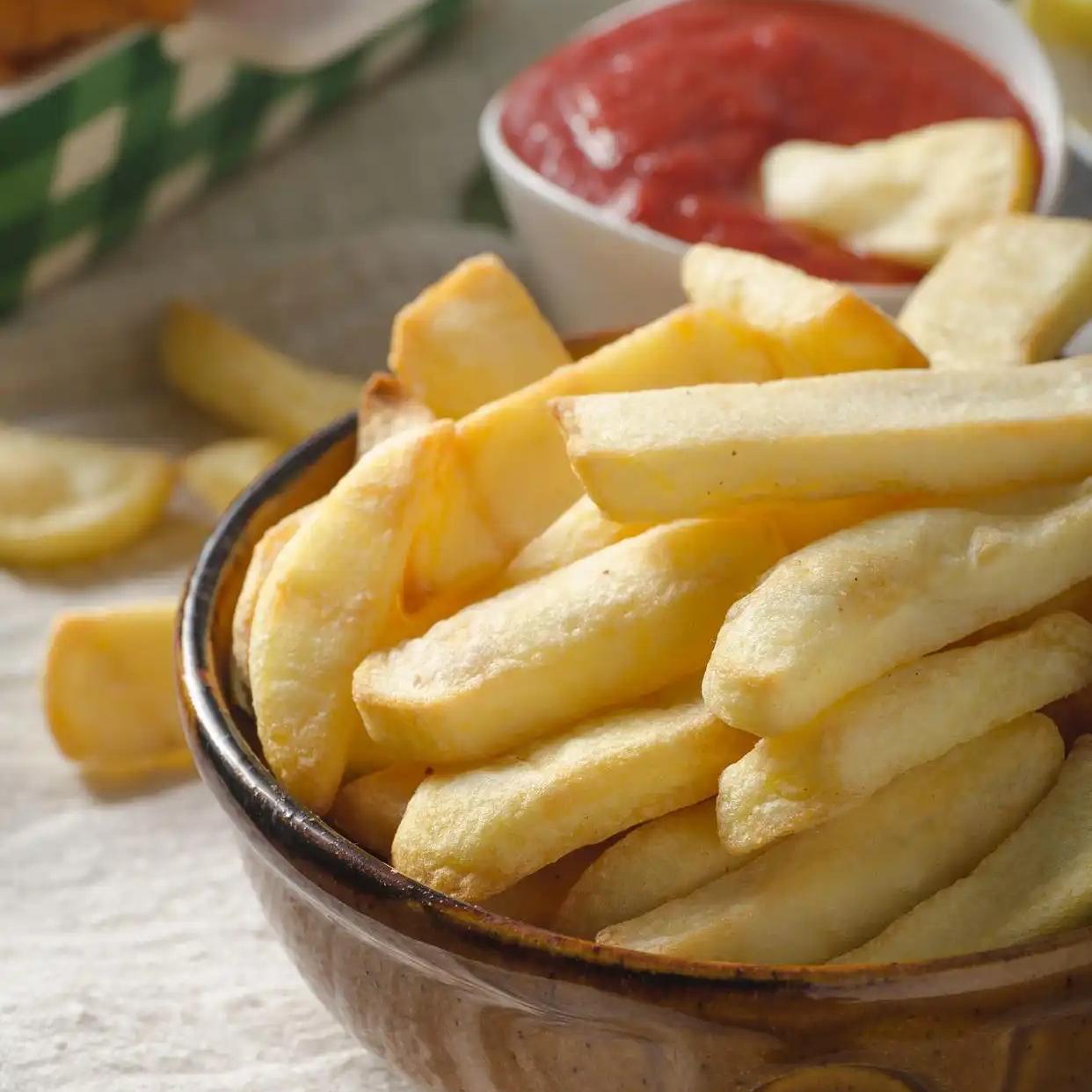
What are Healthy French Fries? French fries are one of the world’s most popular side dishes. However, they are often criticized as “unhealthy” because of oil, calories, or sodium content. But when produced under modern industrial standards, healthy French fries are absolutely possible. From potato selection to freezing, factories can design products that balance nutrition, safety, and convenience.
This article explains what makes French fries healthy, compares homemade vs. industrial production, and shows why factory-made frozen fries are the better option for consumers and businesses alike.
1. What Makes French Fries “Healthy”?
A healthy French fry should:
Be made from non-GMO potatoes with balanced dry matter (20–25%).
Use controlled oil absorption to reduce total fat.
Maintain key nutrients such as potassium, fiber, and vitamin C.
Avoid harmful additives, preservatives, or excess sodium.
Typical Nutrition Profile of Frozen French Fries (per 100 g, IQF frozen, pre-fried)
| Nutrient | Amount (approx.) |
|---|---|
| Energy | 150–160 kcal |
| Carbohydrates | 25–27 g |
| Protein | 2–3 g |
| Fat | 4–5 g |
| Dietary Fiber | 2 g |
| Sodium | < 0.3 g (before seasoning) |
| Potassium | 300–400 mg |
Healthy components: fiber, potassium, plant-based carbohydrates for energy.
Risk components (if uncontrolled): high fat from deep frying, excessive sodium when over-salted.
Thus, healthy French fries come from controlling oil, salt, and processing—not from avoiding French fries altogether.
2. Are Homemade French Fries Healthier?
Many assume that making fries at home is healthier. In reality, homemade fries are not always safer or more nutritious.
Key Differences: Homemade vs. Factory Production
Standardization: Factories use strict cutting machines for a uniform size; homemade fries vary in thickness, affecting oil absorption.
Oil Quality: Industrial pre-frying uses high-grade vegetable oils with monitored turnover; at home, reused oil often increases acrylamide risk.
Food Safety: Factories follow HACCP and ISO standards; at home, cross-contamination risks (raw meat, unwashed potatoes) are higher.
Storage & Stability: Frozen fries are IQF-processed to preserve texture; homemade fries soften quickly and may spoil.
Homemade Risks
Inconsistent frying temperature → higher oil absorption.
No microbial testing → possible contamination.
No packaging or freezing standard → fast quality loss.
So while homemade French fries can be tasty, they are not necessarily healthier.
3. Why Factory-Made French Fries Can Be Healthy
Modern food factories are designed to produce safe, consistent, and nutritionally optimized frozen French fries.
Food Safety: Facilities meet international standards (HACCP, ISO 22000, BRC, Halal, Kosher). Each batch is tested for contaminants.
Ingredient Control: Only high-quality potatoes are used, with controlled oil and no chemical preservatives.
Processing Standards: Blanching reduces acrylamide precursors, IQF freezing locks in nutrients, and minimal oil frying ensures lower fat.
Documentation: Factories follow China GB standards (e.g., GB/T 191 for packaging, GB 14881 for food safety in production).
Thus, factory production ensures healthy French fries by design, not by chance.
4. How Do French Fry Factories Control Quality?
Frozen French fries production follows a well-defined HACCP-based process:
Raw Material Control – Potatoes tested for dry matter, starch, and reducing sugars.
Washing & Peeling – Removes dirt, pesticides, and surface microbes.
Cutting & Blanching – Standardizes size, reduces acrylamide risk.
Pre-Frying – Quick fry at controlled temperature (150–180°C) to create a protective surface.
IQF Freezing – Rapid -40°C freezing prevents clumping and preserves structure.
Metal Detection & Packing – Ensures no foreign objects and maintains shelf stability.
Certifications & Quality Systems
HACCP: Identifies and controls critical hazards.
ISO 22000: Global food safety management system.
BRC/IFS: International retail and supply chain certifications.
These systems ensure fries are not only tasty but also safe and healthy.
5. Why Factory Fries Are Healthier Than Homemade
Restaurants, supermarkets, and fast-food chains worldwide prefer factory-made frozen French fries because they combine nutrition, safety, and convenience.
Case Example 1: Quick-service restaurants (e.g., McDonald’s, KFC) use standardized frozen fries to guarantee consistent calorie and fat levels.
Case Example 2: Supermarkets supply frozen fries with controlled sodium, suitable for health-conscious consumers.
Case Example 3: Export buyers rely on frozen fries’ 24-month shelf life at -18°C, which is impossible for homemade products.
In contrast, homemade fries often absorb more oil and vary widely in calories and texture.
6. Conclusion & Recommendations
If you want healthy French fries, trust factory production:
Standardized processes = balanced nutrition.
Certified safety systems = risk-free consumption.
Longer shelf life = practical for businesses and households.
Whether you are a restaurant buyer, a supermarket importer, or a health-conscious consumer, remember: healthy French fries are not about avoiding fries but choosing fries made under strict industrial standards.
References
FAO/WHO Joint Expert Committee on Food Additives. (2011). Evaluation of certain food additives and contaminants. WHO Technical Report Series.
PotatoPro. (n.d.). Nutritional composition of potatoes and potato products. Retrieved from https://www.potatopro.com
Messer. (n.d.). IQF freezing technology in food preservation. Retrieved from https://www.messer-us.com
GB 14881-2013. General hygiene regulation for food production. Standardization Administration of China.